
The Beginning
How it started.
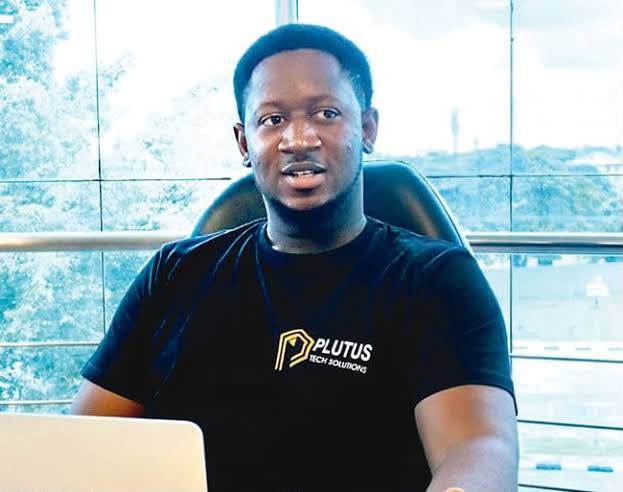
Hi, I'm Gabriel Ezenri, founder of Plutus Tech Solutions.
For years before Plutus existed, I sat on the other side of the table. I worked alongside founders, marketers, and small business owners who had genuinely good ideas. People who had spent months, sometimes years, sitting on a vision they believed in. People who had finally saved enough, borrowed enough, or believed enough to take the leap. And then I watched what happened next, over and over again.
They'd hire a designer who didn't talk to the developer. They'd hire a developer who didn't understand the brand. They'd hire a marketer to promote a product that wasn't really ready. By the time the dust settled, the original idea had been diluted, the budget was gone, and nobody could quite explain why the result didn't feel like the vision they'd carried in their head for so long.
That was the part that stayed with me. Not the technical mistakes, not the missed deadlines, but the look on a founder's face when they realised the thing they'd dreamed about was now a thing they didn't recognise. It happened too often, and it almost always came back to the same root cause. The space between idea and execution had no one in charge of it. Strategy lived in one room, design in another, engineering somewhere else entirely, and the founder was left running between them trying to keep the soul of the project alive.
That gap is what kept pulling at me. As a product manager, my whole job was holding that space together. Keeping strategy, design, and engineering aligned around a single outcome. Translating between people who spoke completely different languages, and protecting the why of a project even when the day-to-day pressure tried to bury it.
I started doing it informally for friends and former colleagues, mostly on weekends. Most of them just needed someone who could see the whole picture, who could turn what was in their head into something the rest of the world could actually use. The moment I saw what happens when one person owns that journey from beginning to end, when the founder can finally exhale and trust the process, I knew I couldn't keep doing it as a side hustle. The need was too real, and too many people were paying the price of going without it.
The early days of Plutus weren't glamorous. They were quiet, mostly. Late nights at the desk after everyone had gone to bed. Undercharging for work that took twice as long as I'd estimated. Learning the hard way that a beautiful design means nothing if the developer can't build it on time, and that a brilliant idea means nothing if the founder loses faith halfway through delivery.
I made mistakes that I'm honestly still grateful for, because each one taught me something I would have paid much more to learn elsewhere. I lost a client or two early on because I overpromised. I took on work I should have turned down because I was too eager to grow. I felt the weight of every missed expectation, and I learned to take that weight seriously.
But every one of those moments shaped how the agency runs today. Every project now has a single point of accountability, so no client ever has to wonder who's responsible. Every estimate has honest contingency built in, because pretending a project will be easier than it is helps nobody. Nobody on my team starts work without understanding the why behind it, because work without meaning is work that drifts. Plutus exists today because of those early lessons, not in spite of them.
The Vision
Why I built Plutus.
What I saw missing in the agency landscape, both in Africa and globally, wasn't talent. There's no shortage of brilliant designers, engineers, and marketers in any market. Walk into any creative space in Lagos, London, or Lisbon, and you'll find people doing extraordinary work. What was missing wasn't skill. It was integration.
Too many agencies were structured like assembly lines, handing work down a chain where each link cared deeply about its piece but had no real stake in the whole. The clients paying for it ended up project-managing their own vendors, sitting through meeting after meeting trying to translate between teams who should have been talking to each other. They were doing exactly the work they had hired an agency to take off their plate, and they were paying premium rates for the privilege.
I wanted Plutus to be different. I wanted us to be the agency that a founder, anywhere in the world, could trust to take an idea and carry it all the way to a launched, growing product, without making the founder the glue. I wanted us to be the team that protects the original vision when the project gets hard, and gently pushes back when the original vision needs to evolve. I wanted us to be the people a client thinks of first when they have a new idea years later, not because of a clever marketing campaign but because of how the last project felt while it was happening.
In five years, I want Plutus to be the name founders mention when they describe how they got from sketch to scale. I want us to be known for the work we don't take on as much as the work we do. Saying no to projects that aren't right for us so we can say a wholehearted yes to the ones that are. I want our portfolio to look less like a long list and more like a small museum, where every project earned its place and every client would say yes if you asked whether they'd hire us again.
And I want the team behind that work to love being here. The kind of place where designers and developers respect each other as equals, where the smartest person in the room isn't the loudest, where junior people grow into senior people because someone took the time to teach them. The kind of place where the standard isn't "good enough to ship" but "good enough to be proud of." Because in the end, the work we do is downstream of the culture we build, and I refuse to compromise on either.
How We Work
What I bring to every project.
There are a few things I personally insist on, no matter how big the team gets or how busy the calendar gets.
The client always knows exactly where their project is. No chasing, no surprises, no week-long silences. I learned a long time ago that silence is the most expensive thing an agency can give a client, because in the absence of information, people fill the gap with worry. So we communicate, even when there's nothing dramatic to report. Especially then.
Designers and developers sit in the same conversations from day one, because the products that fall apart are almost always the ones where they don't. We say no to work that isn't a good fit, even when the money is tempting, because taking the wrong project hurts the client more than turning it down. And we treat every dollar of a client's budget as if it were coming out of my own pocket, which means honest scoping, honest timelines, and honest conversations when something needs to change. If I wouldn't spend it that way on my own business, I won't spend it that way on theirs.
These aren't policies I copied from a management book. They're the things I wish someone had done for me, and for the founders I watched struggle through projects that should have gone better. They're personal. Whether your project is a small website or a multi-year platform build, that's the standard I hold every member of my team to, and that's the standard I'll always hold myself to first.
Connect
Let's talk.
Every meaningful project starts with a conversation. If anything you've read here resonates with what you're trying to build, I'd love to hear about it. Not a pitch, not a sales call, just an honest conversation about what you're working on and whether we might be the right people to help.
Some of my favourite client relationships started with a founder who reached out and said, "I'm not sure if this is even the right time, but..." It usually was.
Connect on: LinkedIn